
 The Environment Agency says that its attendance at pollution incidents is reducing as funding to deal with them has been reduced. The EA is warning that more serious pollution incidents are caused by activities it does not regulate and that “resources are needed to fund this work because one day one could be catastrophic.”
The Environment Agency says that its attendance at pollution incidents is reducing as funding to deal with them has been reduced. The EA is warning that more serious pollution incidents are caused by activities it does not regulate and that “resources are needed to fund this work because one day one could be catastrophic.”
The warning comes in the Agency’s new report for England Regulating for people, the environment and growth 2020 which focusses on the environmental performance of its regulated customers in 2020, covering compliance, pollution incidents, crime and emissions.
The report says that some prolonged non-compliance is due to the behaviour of regulated businesses, while some is due to not having the right regulations or regulatory frameworks.
According to the Agency, environmental regulations were not conceived to accommodate rapid environmental changes and are not yet ready for climate change.
Over the last 5 years the Agency has recorded an average of around 500 serious pollution incidents each year. Despite a slight declining 5-year moving average trend, the number of annual incidents remains high. Out of a total of 563 serious incidents in 2020, 8% were caused by water and sewerage companies and 10% were caused by farming activities.
Sir James Bevan - “The cardinal environmental principle is that the polluter should pay"

Introducing the report, Environment Agency Chief Sir James Bevan said that regulation works and that “done right, it creates a stable and safe environment for industries to work in.”
However, cautioning that “it’s not all perfect”, Sir James said the report shows annual pollution incidents remain high and 86% of river water bodies have not reached good ecological status - “the quality of our environment is not where we want it to be,” he added.
According to the EA Chief, if we want to make regulation fit for the future, the answer is “regulation that is proportionate, risk-based and outcome focused; that is business friendly, as long as business does the right things; and which has the teeth necessary to tackle polluters who do not.”
He also emphasised that effective regulation also needs to be properly funded, commenting:
“The cardinal environmental principle is that the polluter should pay. And those who pose the greatest risk of pollution – farmers, water and sewage companies, waste businesses and so on – should pay the full cost of the regulation necessary to ensure that pollution doesn’t happen.
“Where that isn’t possible, and sometimes it isn’t, the government should make up the difference.”
The report states:
“There are also areas where we lack the powers and resources to effectively tackle some issues. These have meant making some hard decisions, and having to cut or stop some of our activities while taking on additional duties given to us”…..
…“Limited and declining resources for incident response and prevention mean that it is unlikely that incident numbers will fall without further intervention.”
The report draws attention to the fact that data gathered in 2020 is not easily comparable to previous years, pointing out that it is “difficult to differentiate between the impacts of the pandemic on businesses and regulatory activities, with any real changes in business compliance performance.”
While EA staff had continued to get out and about during lockdown to regulate high risk activities they were not able to do as many on-site regulatory visits, they had instead relied much more on technology to conduct remote visits for low risk activities, the report says.
Environmental performance of two water and sewerage companies “consistently unacceptable” during last 5 years
Referring to the Agency’s report in July 2021 on the environmental performance of the water and sewerage companies in 2020, the new report says that while 5 companies achieved the industry leading 4-star Environmental Performance Assessment (EPA) rating, it had rated 2 companies as requiring improvement.
“Their performance has been consistently unacceptable throughout the 5-year EPA period. Overall sector performance is not good enough and there are opportunities for even the best performing companies to improve further,” the new report says.
Commenting on the water environment, the report says 86% of river water bodies have not reached good ecological status and attributes this mainly to environmental impacts caused by agriculture and rural land management, the water industry, and urban and transport pressures.
England’s water resources - current levels of abstraction are unsustainable
Commenting on the wider water environment, the report says England’s water resources are coming under increasing pressure from population growth, economic development and climate change.
The Agency leads on managing two of the biggest climate impacts –- too much and too little water. The report emphasises that adapting and working to get sustainable abstraction is vital to tackle these challenges – EA modelling suggests that around 700 million litres of water per day comes from unsustainable abstractions.
The report reiterates the Agency’s warning that if no action is taken between 2025 and 2050, around 3,400 million extra litres of water per day will be needed for public water supply to address future pressures. Key issues include:
- Of the water taken from freshwater sources, 51% is abstracted by water companies for public water supply and 38% is used by other industries.
- Current levels of abstraction are unsustainable in more than a quarter of groundwater bodies and up to one-fifth of surface waters, reducing water levels and damaging wildlife.
In 2020, the Restoring Sustainable Abstraction programme changed 28 abstraction licences, removing the risk of 13 billion litres of water being over-abstracted each year. In addition, through reviewing and revoking unused and underused licences in 2020, the EA revoked or reduced 26 licences where the risk of over-abstracting about 595 billion litres of water has been removed.
Rivers - "tough regulation needs to go hand in hand with water company investment"
The EA draws attention to its success in transforming previously ecologically dead rivers in urban catchments to rivers which now support all kinds of life, decsribing this as "a result of our action and £30 billion of investment from water companies using our evidence. "
However, it acknowledges that rivers "are still not as good as they should be" and the impacts of climate change and population growth are impacting them. "To create the rivers we all want, tough regulation needs to go hand in hand with water company investment and stewardship, improved farming practices and greater public awareness," the report says.
The Agency also makes the point that while water quality improvements can and have been achieved where pollution arises from point sources, for example water industry discharges, diffuse pollution and the impacts of agricultural activities are not covered under permitting.
Farming - one of biggest obstacles to good ecological status and responsible for about 40% of water body failures

Farming is identified as responsible for about 40% of water body failures and one of the biggest obstacles to good ecological status. The report states:
“It is one of the sectors that causes a large number of serious pollution incidents, it emits the most ammonia and is not subject to any progressive regulatory framework where costs are recovered.”
Cost recovery based regulatory framework for farm regulation now needed
In 2019 agriculture and rural land management continued to account for around 40% of water bodies not reaching good ecological status.
The report says in 2020 the Agency detected over 200 incidents of non-compliance with the Farming Rules for Water – but that its ability to take action as a result was limited by a lack of resources.
However, where the EA had been able to apply an advice-led approach to regulation of agriculture it had resulted in positive environmental outcomes and substantial investment in farm infrastructure.
The Agency is now calling for a cost recovery based regulatory framework for farm regulation which would provide it with the additional resources needed to inspect farms.
“This would further help farmers understand their regulatory duties, resulting in improved water quality by reducing the frequency of both point and diffuse sources of pollution” the report says.
It also suggests that this would put farmers in a stronger position to benefit from future funding opportunities, such as the new Environmental Land Management schemes (ELMS), on the basis that regulatory compliance is often a baseline expectation for farmers being eligible for such funding. The report draws attention to areas where significant improvement is needed, including:
- No surface water bodies met the criteria for achieving good chemical status in 2019, compared to 97% passing in 2016.
- Only 45% of groundwater bodies achieved good chemical status in 2019.
- 221 of the 463 surface water Drinking Water Protected Areas (48%) are ‘at risk’ of deterioration
- 127 of the 271 groundwater Drinking Water Protected Areas (47%) are ‘at risk’ of deterioration and 71 are not meeting good chemical status
The top pollutants are pesticides and nitrates from fertilisers - through runoff into water, they are a risk to sources for abstraction and have wider environmental impacts. Their removal increases costs at water treatment works.
EA Event Duration Monitoring data provides robust and consistent way of monitoring storm overflows
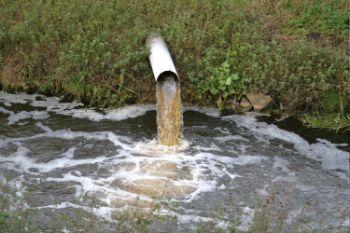
Commenting on the use of storm overflows - currently the focus of ongoing widespread criticism - the report describes this as "a necessary part of the current sewerage system." The EA points out that they are designed to discharge sewage to rivers or the sea at times of heavy rainfall or snow melt to prevent it backing up into homes and streets. However, it acknowledges that their use has increased in recent years as climate change has led to greater rainfall, and "water infrastructure has not kept pace with population growth."
The report states:
“Our Event Duration Monitoring (EDM) data provides a robust and consistent way of monitoring how often and for how long storm overflows are used, and underpins our planning, compliance and enforcement work.”
“Working with water companies we have concluded a programme for water companies to install EDM monitors on over 80% of storm overflows. The permits we issue to water companies legally oblige them to monitor and report EDM data from their storm overflows. By the end of 2023, the remaining storm overflows will be monitored to provide a complete picture of the 15,000 permitted storm overflows in England.”
“We want to see the end of damaging pollution that storm overflows cause.”
Click here to access the Regulating for people, the environment and growth, 2020 report online

Sign In
