
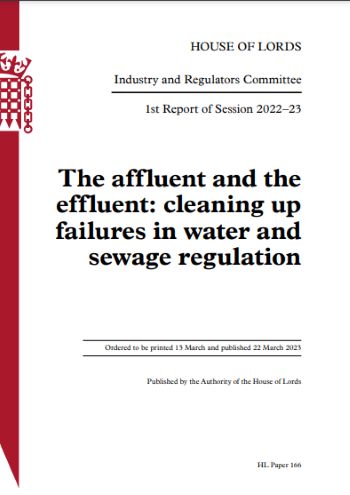
 The Government, investors, water companies and environmental regulators – Ofwat in particular – all came in for remarkable levels of criticism from Conservative, Labour. Liberal Democrat and cross-bench peers in a House of Lords debate last week.
The Government, investors, water companies and environmental regulators – Ofwat in particular – all came in for remarkable levels of criticism from Conservative, Labour. Liberal Democrat and cross-bench peers in a House of Lords debate last week.
The debate on the Industry and Regulators Committee report “The affluent and the effluent: cleaning up failures in water and sewage regulation” was opened by Committee Chair Lord Hollick (Labour) who described the Government’s response ,the report as ”curt and dismissive.” The response had “implied that the Committee had gone beyond its remit in questioning matters of public water policy” he said, and “was a clear attempt by the Government to dodge parliamentary scrutiny of their record.”
He told fellow peers:
“It is clear that investment over the last decade in our water system fell far short of what was needed—a casualty of weak regulation and incompetent government leadership.
“The opportunity to invest when interest rates were historically low and before prices surged with inflation was squandered. Now, a much higher level of investment is needed to remedy this neglect, and that burden will fall heavily on household bills.”
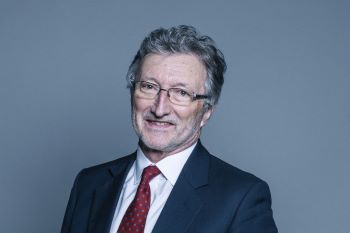
In a stinging attack which pulled no punches, Lord Hollick went on to say:
“Ofwat has the powers to regulate the price water companies can charge, the level of their capital investments and the size of returns they can make to their investors, but it has failed to ensure that companies invest sufficiently in water infrastructure, thus creating a backlog. Ofwat has been cautious about raising customer bills to finance long-term investment without the determined political backing of the Government. Decisions about the level of what people pay is, in the end, the responsibility of the elected Government, who must give regulators clear guidance on how to strike the right balance between investment and affordability.”
“Water companies have been assiduous in maximising their returns from their monopolies. It has been estimated that their dividends extracted since privatisation have exceeded £50 billion, while the debt of water companies has increased to over £60 billion, partly as a result of private equity owners loading the companies up with debt to help to pay themselves larger returns.”
“All this has been in plain sight of a dozing regulator and an unconcerned Defra. This debt mountain has left companies vulnerable to higher interest rates. Ofwat now has stronger powers to control dividends and has set out a more determined approach, but this cannot recoup what has already been lost.”
“The regulator now faces the challenge of requiring companies to boost significantly their level of investment just when they are facing rising costs, financial strains and uncertainty over government and regulatory actions, all of which is making water companies much less attractive to investors.”
He also expressed the Committee’s concern about whether the water companies were capable of delivering investment at the level that is required, saying this was the reason the Committee had called on the Government to increase the use of competition in delivering major water infrastructure.
Lord Hollick also warned that concerns remained about the capacity of water companies and their supply chains to carry out projects at the necessary scale proposed. In addition, the Committee also“..remain concerned at the Government’s deep-rooted complacency. They have failed to set out how customers will be supported to pay rising bills. They have failed to provide Ofwat with any guidance on how to balance investment and bills. They have shown an almost casual confidence in the task of funding a huge investment programme in very challenging times…"
Conservative peer Lord Agnew agreed, commenting:
“It is my contention that buried in this ocean of complacency is the more disingenuous excuse that it is all too expensive to deal with. In 2020, the Government optimistically created a thing called the Storm Overflows Taskforce. In November 2021, it reported that it would cost between £350 billion and £600 billion to solve the problem. This is equivalent, at the bottom end, to 15 more Elizabeth lines or—dare I say it?—at the top end, to six more full-fat HS2s. This is ludicrous, because numbers like this attempt to shut down the debate, as they are utterly unaffordable. The reality is that so much could be done affordably.”
Thérèse Coffey "thinks she has immunity to every problem that has ever arisen" at Defra

Baroness Taylor of Bolton singled out Thérèse Coffey, Secretary of State for Environment, Food and Rural Affairs, for particular criticism, saying:
“The Secretary of State, in particular, thinks she has immunity to every problem that has ever arisen in her department.
“Investors have done very well; the rest of us have had serious problems and been left with a situation in which we now need many critical improvements…. The water companies have done well, but everybody else... has been left with considerable problems. This industry has not invested, and very big figures are needed in investment for the future.”
She went to ask who would pay for the investment needed, saying “those who ripped us off are long gone. Many of those companies have been sold on and assets have changed.”
Cross bench peer Lord Cromwell said that at the start of the inquiry he had “actually had some sympathy with the regulators and the water companies.” However, “this pool of sympathy had dried up during the course of the inquiry, he said:
“We uncovered financial engineering being used to take advantage of regional monopolies, including debt loading and opaque dividend extraction. This was at the expense of much-needed - now frighteningly overdue - investment into the very infrastructure on which our water and sewerage system depends”
Ofwat target of number of criticisms

Criticisms aimed at Ofwat included:
- whether Ofwat was fit for purpose and the regulator been too weak
- the Committee was “far from convinced that Ofwat had the business savvy to spot what was going on and act early enough to stop it. By its own admission, it took only a light-touch approach to regulating the industry.”
- Ofwat was “utterly out of its depth” in trying to read accounts and make sense of financial engineering.
- Ofwat and the Government had prioritised holding down consumer prices over the maintenance and enhancement of quality
- Ofwat’s regulation of the sector has been feeble
Lord Cromwell warned that a number of water companies have “been teetering on the brink of being washed over the financial weir into bankruptcy” and that despite being told initially that the water companies would raise the money in the City or from their existing investors, the “talk now is of putting up customer bills.”
He also agreed with Lord Hollick’s comment that the Committee had “severe doubts about the capability of some water companies”, even if the necessary billions of pounds were made available to them, to manage “the very substantial infrastructure projects” needed. “Ofwat, when asked about this, appears to be crossing its fingers and hoping for the best,” he suggested.
Liberal Democrat Peer Baroness Bowles said that one of the conclusions of the report was that utility companies should be subject to the same kinds of transparency requirements as publicly listed companies.
She explained:
“There has clearly been failure. Water companies have got away with sweating the assets for far too long, to pay out large dividends instead of properly providing for future infrastructure, and have turned emergency sewage discharge into a routine way of operation.
“Regulators focused too much on bills as their yardstick, were dozy about future water security and complacent about discharges, while Governments - always suspect in the short-term electoral cycle - have set meagre targets and inadequate Environment Agency budgets and have been held in thrall to the construction industry when it comes to changing planning laws in necessary ways. It is a catalogue of failure, leaving a dire situation for both finance and infrastructure.”
Baroness Jones: "this is going to be an issue on doorsteps for the general election"

Green Party peer Baroness Jones told her colleagues that water would be an issue on doorsteps for the general election, “so the faster the Government act, the better for them.” Ofwat had allowed bills to rise by more than 40% in recent decades in order to fund investment, but the investment largely did not happen, she said. Most of it went to shareholders at the average rate of £2 billion a year for the past 27 years, she added, commenting
“I do not want to pay higher bills; I want a refund, and I think a lot of people will agree with me.”
Labour peer Lord Whitty described the report as “a trenchant, highly critical report with very interesting recommendations and conclusions,” saying “this is a complete failure of the system of regulation, post-privatisation.”
He went on to suggest:
“We now need to face up to the fact that the major political parties are not prepared to commit themselves to renationalisation…
“In my view, if we are not to go for renationalisation then we need to establish a single and very powerful regulator for the water sector as a whole—one which subsumes all these interests and puts water centrally, as it should be, in the management of the resources of this country.”
Lord Cameron on priorities: “We need to know how and where to spend our money”
Cross bencher Lord Cameron of Dillington, who is also Chair of the UK Centre for Ecology & Hydrology, made an interesting contribution to the debate. He suggested that “with money short and rivers below par, we need to know what our priorities should be” - for example, are the phosphates too high in the night or the day, or before or after rain? Is it the nitrates or the microplastics, nanoplastics, chemicals or a lack of oxygen that is the more pressing problem in each river? “We need to know how and where to spend our money,” he concluded.
Lord Sikka: “Why is it acceptable to Government that entities owned by foreign Governments can own utilities here, while there is no government-owned entity here that owns the utility"
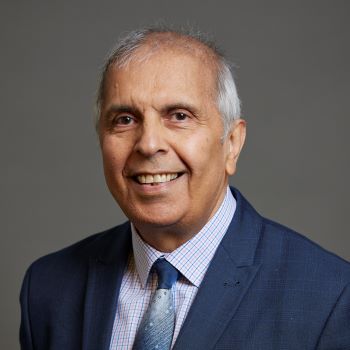
Labour peer Lord Sikka focussed on the financial complexities of the water sector, asking whether the Minister could explain “what justifies the 35% operating profit margins for water companies?”
He suggested that the investment picture was “muddled by financial engineering”, citing as an example Thames Water’s 2022-23 financial statement which states that the company:
“capitalises expenditure relating to water and wastewater infrastructure where such expenditure enhances assets or increases the capacity of the network. Maintenance expenditure is taken to the income statement in the period in which it is incurred. Differentiating between enhancement and maintenance works is subjective”.
According to Lord Sikka, this translates as “the amounts which are capitalised for maintenance cannot be independently corroborated at all.” He asked Lord Benyon, who was speaking for the Government, to make a statement explaining how much of the maintenance expenditure has been capitalised by water companies so far.
The Labour peer said the water companies were capitalising interest payments on their debt, calling it “utterly imprudent.”
He continued:
“This overstates their investments and distributable reserves, and it understates their leverage. In the last two years alone, Thames Water has capitalised £330 million of interest payments, which increases its capacity to pay dividends….will the Minister return to the House and make a statement explaining how much of the interest has been capitalised by water companies and what the related risks to them are?”
He also suggested that water company dividends are understated, referring to a statement by the Minister in the House of Commons on 28 June that Thames Water “has not paid any dividends for the last six years.”
He continued with a detailed analysis:
“Page 43 of its 2022-23 financial statement describes a £45 million payment to its immediate parent company, and the word “dividend” is used. Thames Water Utilities Holdings Limited received that and then forwarded it to another company, whose accounts also say that it is a dividend. So, just in the last two years, Thames Water has paid its parent company £82 million. If it is spelled “dividend” and if directors and auditors say it is a dividend, it must be one—the Minister cannot deny that in any way. A wholly owned subsidiary has only one shareholder—the parent company—and, if the subsidiary is paying a dividend, it is a dividend. I hope the Minister will be able to clarify that.
“Strangely, page 43 of Thames Water’s accounts also says that this dividend is not really a dividend because the purpose is “solely to service debt obligations and group related costs of other companies within the wider Kemble Water Group”.
He also asked Minister Lord Benyon if he could he explain “why is it acceptable to the Government that entities owned by foreign Governments can own utilities here, while there is no government-owned entity here that owns the utility?”
Cross bencher Duke of Wellington commented that when the water companies were privatised in 1989, he could “not imagine that Ministers then thought that so many of them would pass into the hands of private equity groups, many of them based outside the United Kingdom.”
He asked whether it might not be more effective to merge into Ofwat the parts of the Environment Agency that currently regulate the water companies, saying:
“If all along there had been a department within Ofwat responsible for environmental regulation, in addition to financial regulation, for which it is responsible, the growing problem of sewage discharges would have been detected and understood much earlier and corrective action could therefore have been taken some decades ago.”
Labour peer Viscount Chandos described Conservative government policies over 40 years as “an abject failure”, adding “how feeble Ofwat’s regulation of the sector has been, even within those failed policies.”
Liberal Democrat Baroness Bakewell said there had been been failures on all sides and that a water and sewerage infrastructure was needed that was fit for purpose and could meet its current demands, not one that was “antiquated, creaking at the knees and crumbling.”
Baroness Hayman of Ullock, a Labour peer, said that despite the need for reservoirs under current plans, not a single major one will have been built in the UK between 1991 and 2029, describing it as “a failure of infrastructure and planning.” She referred to evidence taken from Professor Barker about the Cheddar reservoir and the fact that Ofwat had “refused to fund it on the basis that the case had not been made - but it was subsequently recognised that it was actually really important.”
Lord Benyon: “I do not share the Committee’s conclusion that there has been complacency or a lack of leadership from the Government"
Responding on behalf of the Government, Lord Benyon began by saying that he deeply regretted if any member of the Committee felt that the Government’s response to the report was terse.
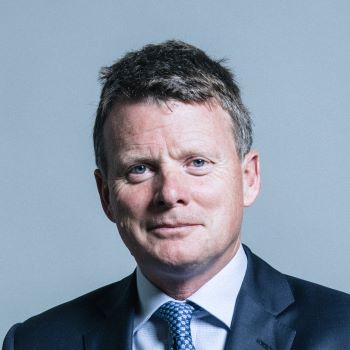 He told the House:
“I do not share the Committee’s conclusion that there has been complacency or a lack of leadership from the Government on the topic of water regulation.
“No Government have done more to tackle the pressing issues facing the water industry.”
Water companies’ planned £96 billion of investment for AMP8 represents an 88% increase in investment compared with AMP7
He explained that the water companies’ planned £96 billion of investment between 2025 and 2030 represented the largest investment in infrastructure ever made by the water sector and an 88% increase in investment compared with the current AMP7 five-year price review period.
However, he warned that:
“This investment comes at a cost. Noble Lords will have seen estimates from the water sector suggesting that water bills will rise by an average of £156 a year by 2030 to fund the increased investment. It is important to stress that these are not final figures; they are an opening pitch. It is important to remember that the current average water bill in England is lower than that in many European countries such as Spain, France and Norway.”
Commenting on securing the investment needed to deliver the plans, Lord Benyon said he would “gently challenge the Committee’s view that the water sector will not be able to raise the required investment.” Citing Severn Trent as an example, he pointed out that the water sector continues to attract international capital. The water company announced on 29 September it had raised £1 billion of new equity from its investors.
Lord Benyon continued:
“Companies must deliver value for money. Any increase in customer bills must be justified, efficient and deliver significant improvements in river quality and water resilience. Customers should only pay for new investment, not for companies’ past failings.”
Lord Hollick wound up the debate by saying:
“The Minister can be in no doubt about the anger about what has happened in the water industry and the fury of consumers. ...
Nobody is hiding the cost of this neglect of investment. Since privatisation, £200 billion has been invested in the water industry, which is about £5 billion per year. I am not adjusting for inflation, but we have now gone up to £96 billion over the next five years, so we can see the sharp rise to cover the lost ground. I pointed out in my remarks that, at the time, inflation and interest rates were low and therefore the cost of repairing the roof while the sun shone was there for all to see, but I am afraid that the Government squandered that opportunity, and we all will pay the bill for that.”
Click here to read a transcript of the debate in full
Click here to download the Industry and Regulators Committee report “The affluent and the effluent: cleaning up failures in water and sewage regulation”
Sign In
