
The Prime Minister has today set out an ambitious ten point plan for a green industrial revolution covering clean energy, transport, nature and innovative technologies.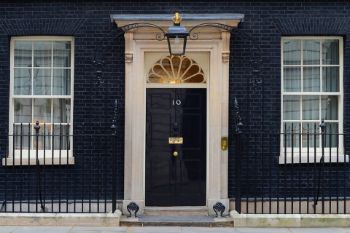
The Prime Minister has today set out an ambitious ten point plan for a green industrial revolution covering clean energy, transport, nature and innovative technologies.
Launched in the run up to the COP26 climate summit in Glasgow next year, the plan is intended to enable the UK to progess with eliminating its contribution to climate change by 2050.
A statement issued by 10 Downing Street said the plan – which is part of the PM’s mission to level up across the country - will mobilise £12 billion of government investment to create and support up to 250,000 highly-skilled green jobs in the UK, and spur over three times as much private sector investment by 2030.
The plan puts the UK’s industrial heartlands, including in the North East, Yorkshire and the Humber, West Midlands, Scotland and Wales at the centre of the blueprint, with the aim of driving forward the green industrial revolution and building green jobs and industries of the future.
The ten points are:
- Offshore wind: Producing enough offshore wind to power every home, quadrupling how much we produce to 40GW by 2030, supporting up to 60,000 jobs.
- Hydrogen: Working with industry aiming to generate 5GW of low carbon hydrogen production capacity by 2030 for industry, transport, power and homes, and aiming to develop the first town heated entirely by hydrogen by the end of the decade.
- Nuclear: Advancing nuclear as a clean energy source, across large scale nuclear and developing the next generation of small and advanced reactors, which could support 10,000 jobs.
- Electric vehicles: Backing our world-leading car manufacturing bases including in the West Midlands, North East and North Wales to accelerate the transition to electric vehicles, and transforming our national infrastructure to better support electric vehicles.
- Public transport, cycling and walking: Making cycling and walking more attractive ways to travel and investing in zero-emission public transport of the future.
- Jet Zero and greener maritime: Supporting difficult-to-decarbonise industries to become greener through research projects for zero-emission planes and ships.
- Homes and public buildings: Making homes, schools and hospitals greener, warmer and more energy efficient, whilst creating 50,000 jobs by 2030, and a target to install 600,000 heat pumps every year by 2028.
- Carbon capture: Becoming a world-leader in technology to capture and store harmful emissions away from the atmosphere, with a target to remove 10MT of carbon dioxide by 2030, equivalent to all emissions of the industrial Humber today.
- Nature: Protecting and restoring the natural environment, planting 30,000 hectares of trees every year, whilst creating and retaining thousands of jobs.
- Innovation and finance: Developing the cutting-edge technologies needed to reach the new energy ambitions and make the City of London the global centre of green finance.
Boris Johnson commented:
Although this year has taken a very different path to the one we expected, I haven’t lost sight of our ambitious plans to level up across the country. My Ten Point Plan will create, support and protect hundreds of thousands of green jobs, whilst making strides towards net zero by 2050.
Our green industrial revolution will be powered by the wind turbines of Scotland and the North East, propelled by the electric vehicles made in the Midlands and advanced by the latest technologies developed in Wales, so we can look ahead to a more prosperous, greener future.
To deliver on six points of the plan, the Prime Minister has announced new investment, including:
Carbon capture: To revitalise the birthplaces of the first industrial revolution, the UK will be at the global forefront of carbon capture, usage and storage technology, benefiting regions with industries that are particularly difficult to decarbonise.
An extra £200 million of new funding to create two carbon capture clusters by the mid-2020s, with another two set to be created by 2030. This increased the total invested to £1 billion, helping to support 50,000 jobs, potentially in areas such as the Humber, Teesside, Merseyside, Grangemouth and Port Talbot.
Hydrogen: Up to £500 million, including for trialling homes using hydrogen for heating and cooking, starting with a Hydrogen Neighbourhood in 2023, moving to a Hydrogen Village by 2025, with an aim for a Hydrogen Town – equivalent to tens of thousands of homes – before the end of the decade. Of this funding, £240 million will go into new hydrogen production facilities.
Nuclear: £525 million to help develop large and smaller-scale nuclear plants, and research and develop new advanced modular reactors.
Electric vehicles: Following extensive consultation with car manufacturers and sellers, the Prime Minister has confirmed that the UK will end the sale of new petrol and diesel cars and vans by 2030, ten years earlier than planned. However we will allow the sale of hybrid cars and vans that can drive a significant distance with no carbon coming out of the tailpipe until 2035.
The UK car industry already manufactures a significant proportion of electric vehicles in Europe, including one of the most popular models in the world.
To support the acceleration, the Prime Minister has announced:
£1.3 billion to accelerate the rollout of chargepoints for electric vehicles in homes, streets and on motorways across England, so people can more easily and conveniently charge their cars.
£582 million in grants for those buying zero or ultra-low emission vehicles to make them cheaper to buy and incentivise more people to make the transition.
Nearly £500 million to be spent in the next four years for the development and mass-scale production of electric vehicle batteries, as part of our commitment to provide up to £1 billion, boosting international investment into our strong manufacturing bases including in the Midlands and North East.
This will help protect and create thousands of new jobs, particularly in the Midlands, North East, and North Wales.
The Government will also launch a consultation on the phase out of new diesel HGVs to put the UK in the vanguard of zero emission freight. No date has been set yet.
Homes and public buildings: £1 billion next year into making new and existing homes and public buildings more efficient, extending the Green Homes Grant voucher scheme by a year and making public sector buildings greener and cutting bills for hospitals and schools, as part of the Public Sector Decarbonisation Scheme.
Greener maritime: £20 million for a competition to develop clean maritime technology, such as feasibility studies on key sites, including Orkney and Teesside.
According to the Prime Minister, other key parts of the plan will be driven forward by significant investment set out over the last year, including the £1 billion energy innovation fund to stay ahead of the latest technologies needed to reach new energy targets, £5 billion for alternative greener ways of travel including cycling, walking, and buses, and £5.2 billion to create for new flood and coastal defences in England by 2027.
The statement says:
“These new commitments backed by government funding send a clear signal to industries across the British economy to invest in the UK, which is why today the Prime Minister will host a virtual roundtable with green investors to set out his ambitious plan and incentivise further private sector investment.”
“This marks the beginning of the UK’s path to net zero, with further plans to reduce emissions whilst creating jobs to follow over the next year in the run up to the international COP26 climate summit in Glasgow next year.”
T


Sign In
