
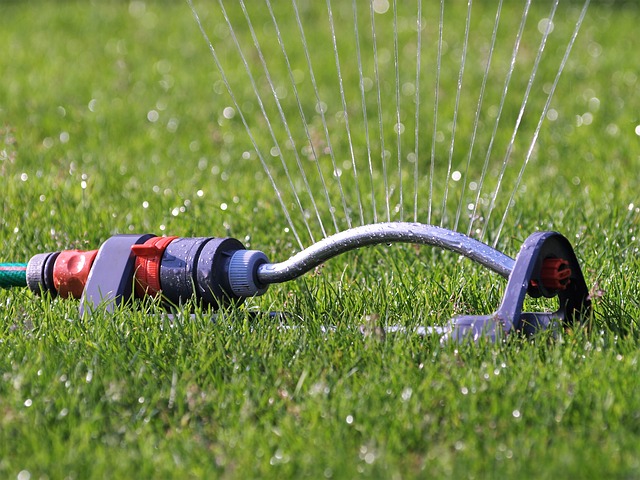
 The threat of a hosepipe ban during a hot summer could be a thing of the past, thanks to improvements in communications technology and a greater understanding of how to encourage customers to reduce water use, according to new proposals from Yorkshire Water.
The threat of a hosepipe ban during a hot summer could be a thing of the past, thanks to improvements in communications technology and a greater understanding of how to encourage customers to reduce water use, according to new proposals from Yorkshire Water.
The proposals would see the company making use of its increased understanding of customer preferences and the new ways to reach customers that have developed over recent years, such as social media and targeted digital advertising, with the aim of working with customers to reduce their water use year-round, reducing the risk of the need to impose mandatory measures during dry weather.
Hosepipe bans have been part of drought management processes and legislation for managing for many years, but they are rarely used and there is little evidence to support their effectiveness in reducing demand.
It is estimated that of average household daily water usage, only about 1% goes on the garden and 1% on the car, meaning the scope for a hosepipe ban to be able to reduce demand is limited.
Recent research by Yorkshire Water also found that hosepipe bans are also very unpopular with customers. Many customers explained that hosepipes are important for carrying out tasks that are personally important to them, such as enabling hobbies or time with their families.
Customers instead expressed a clear preference for being provided with information on how to voluntarily reduce their water use both inside and outside the home all year round, rather than simply being banned from using a hosepipe.
The customer research findings prompted Yorkshire Water to commission an independent White Paper to look at evidence on the effectiveness of both temporary use bans – TUBs - (commonly known as hosepipe bans) and alternative approaches to changing behaviour.
The paper, produced by specialist consultants London Economics, found that:
- The evidence on the effectiveness of temporary use bans is relatively scarce. At the same time, the quality and robustness of some available assessments are questionable, or at least highly circumstantial.
- The most reliable analyses of the impacts of TUBs, by the Environment Agency and UKWIR, found overall reductions ranging from 1% (i.e. negligible) to 9% for the TUBs implemented in 2006 and 2012, with the actual impact dependent on a wide range of factors.
- Many alternative interventions have been found to be similarly, if not more effective than water restrictions. This makes them attractive as they can be quick and cost effective to implement while not triggering negative consumer reactions.
Both the White Paper and the customer research are being published by Yorkshire Water as the company looks to start a conversation with the public, other water companies and regulators on what is the best way to approach managing demand in the 21st century.
“Customers don’t like idea of being banned from carrying out activities involving a hosepipe”
Yorkshire Water Chief Executive Richard Flint said:

“What is very clear from our customer research is that customers quite understandably don’t like the idea of being banned from carrying out activities involving a hosepipe, which for many people are personally important. However, most customers are happy to play their part by reducing consumption if they are given information on why changes are needed.”
“Hosepipe bans were developed as a 20th century solution to drought, but we are now in a very different world. Social media means it’s now much easier to get messages to people and we have much more sophisticated ways of targeting information to make it easy for people to take action. We now need to ensure our drought plans reflect this, which might mean hosepipe bans are a tool that are no longer relevant.”
“Instinctively this makes sense, but the White Paper produced by London Economics provides robust evidence that the impact of behaviour change campaigns can be at least as effective as unpopular hosepipe bans.”
“The benefit of taking an approach that is based around working with customers in this way is that it can be applied year-round, helping to drive down demand and conserve water for our summers. Yorkshire already has the lowest per capita consumption in the country, but by reducing demand even further, we will be in a much better position to manage the challenges that climate change is bringing.”
“We now need to work with customers and our regulators to figure out how we can work together to develop an approach to managing demand that takes account of the evidence of customer preferences, but also ensures robust protection for the environment. It is in everyone’s interest that we find an approach that is effective and backed up by evidence.”
Over the coming weeks Yorkshire Water will be asking customers for further feedback on the proposals, before testing new communications and campaigns approaches to assess their effectiveness in reducing demand.
Click here to download Box Clever - Reducing Demand for Water Research
Click here to download Future options for managing customer demand for water White paper


Sign In
