
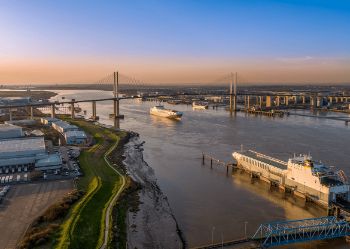
 The Port of London Authority (PLA) has awarded a contract to model the future of energy demand and supply on the tidal Thames as it looks to shape the zero carbon port for the future.
The Port of London Authority (PLA) has awarded a contract to model the future of energy demand and supply on the tidal Thames as it looks to shape the zero carbon port for the future.
Photo: Mark Dillen / Skyshark Media for the Port of London Authority
The contract award to Royal HaskoningDHV and start of the work, was announced at the PLA’s online annual stakeholder forum on Tuesday, 11 May.
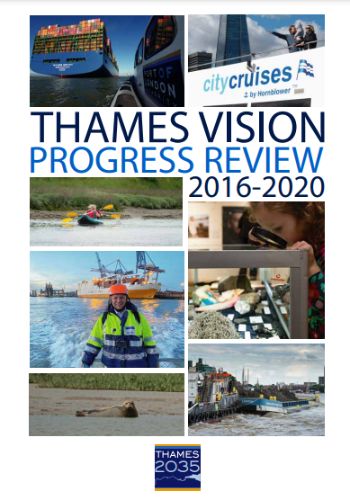
Chief executive Robin Mortimer says that the new study is essential to ensure that the port remains competitive in the long term. It will be a building block of an updated strategy for the river: Thames Vision 2050. The initial Vision, launched in mid-2016, covered the period to 2035. The PLA also announced the publication of a five year Thames Vision Progress Review at the forum.
“The future of Thames river use is going to be shaped by substantial change as the economy decarbonises in response to climate change, new technologies emerge, trading patterns adjust, and we recover from the pandemic,” Robin Mortimer explained. “We have actively been looking at what this means for the port over the last eighteen months.
“Our port trade forecasts show a decline in oil product cargoes in the port through the 2030s as the economy decarbonises, whilst new opportunities will emerge in sustainable fuels. This will be matched to changing energy needs of ships calling in the Port and smaller vessels working on the river. The new study will assess energy demand and the infrastructure needed to meet it.
“We will share the findings with stakeholders as we shape Thames Vision 2050. This long-term strategy for the river will set out the zero carbon future for the UK’s biggest port, busiest inland waterway, centre for wildlife, sport, recreation and culture.”
Royal HaskoningDHV, working with University Maritime Advisory Services, will undertake the energy demand study for the PLA, building on the Emission Reduction Roadmap for Inland Vessels on the tidal Thames, released in 2020. The roadmap sets out options available for reducing air and carbon emissions, including biofuel and emissions abatement, battery-electric, and fuel cell-electric; it concluded a mix of energy provisions will be needed to suit the different operational needs on the tidal river.
The aim of the energy demand modelling is to assess the energy solutions and infrastructure needed to support decarbonisation in order to create certainty for adoption of low carbon technologies, for operators on the Thames, including the PLA’s own vessels. It will help the PLA and the wider Thames community in making their investment decisions.
The first phase of the study will look at the different needs along the tidal Thames between now and 2050, when the UK is legally obliged to achieve Net Zero, based on stakeholder contributions and previous research by the PLA.
Factors considered will include the speed of technological change for both inland and international shipping fleets, future growth, geographic constraints, safety, supply chain, current regulations, and commercial viability.
The second phase will address the feasibility of delivering the identified solutions at specific representative sites, gauging the pros and cons of the best suited solutions, including cost, spatial and ancillary infrastructure needs, resulting in a likely scenario for different use cases. Short-, medium- and long-term options will emerge, including the mix of diesel, biodiesel and other transition fuels, including LNG.
James Trimmer, PLA Director of Planning and Environment, said:
“The Energy Mapping and Demand Project will allow us to set out a clear plan for what will be installed where and when, helping us, other operators and landowners make decisions on investments in innovative technologies. It will also support the development of new jobs and business services as the transition to new technologies progresses.”
The model will be developed over the next couple of months. The summary of the results will be published on the PLA website later in the year to help all relevant stakeholders access the information.
Alongside the release of a five year Thames Vision Progress Review, the PLA also expects to begin an initial six week call for evidence in late May on an updated Thames Vision, covering the period to 2050.
This update will combine the port forecast and energy modelling to look forward to actions required for the adoption of low carbon fuels by maritime operations and the consequences on health, wildlife and water quality. The initial Vision, launched in mid-2016, covered the period to 2035.
The PLA last year announced its commitment to achieve Net Zero by 2040, or earlier. Its latest annual environment report has also been released this month, reflecting progress across air & water quality; resource; and biodiversity.
Click here to download the PLA Thames Vision Progress Review 2016-2020
Click here to download the PLA Environmental Report 2020

Sign In
